

How to Tackle Overdue Bills Fast (Without Stress): A Proven Step-by-Step Plan

You don’t fall behind on bills overnight, but it can feel like everything crashes all at once. The good news? You can regain control faster than you think, starting today.
Falling behind on bills isn’t a failure; it’s a situation. And like any situation, it can be solved with the right strategy. Many people struggle to pay at least one bill on time each year. So, if this seems like you, you're not alone, but you can get ahead.
Let’s walk through exactly how to tackle overdue bills quickly, reduce stress, and rebuild financial confidence.
Why Overdue Bills Spiral (And How to Stop the Cycle)
Overdue bills don’t just sit quietly; they grow. Late fees stack. Interest compounds. Stress builds. And suddenly, avoidance becomes the default response.
Here’s why the cycle happens:
You feel overwhelmed → you delay action
Delayed action → higher balances
Higher balances → more stress
More stress → continued avoidance
The breakthrough moment: Action breaks the cycle.
Even small steps create momentum, and momentum creates results.
Step-by-Step Plan to Tackle Overdue Bills Quickly
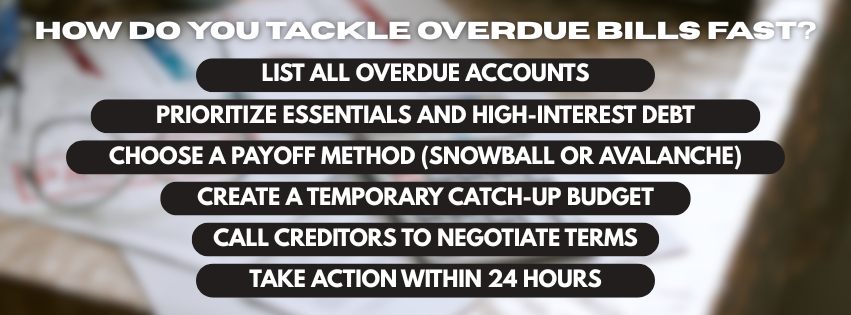
1. List Every Overdue Bill (No Guessing)
Start with clarity.
Write down:
Creditor name
Total amount owed
Minimum payment
Due date
Interest rate or late fees
Why this works: Writing down problems can help reduce anxiety and improve decision-making.
2. Prioritize Bills Strategically
Not all bills carry equal weight.
Focus on:
Essentials first – housing, utilities, insurance
High-interest debt – credit cards
Accounts at risk of collections
This ensures your life stays stable while minimizing long-term damage.
3. Choose a Payoff Strategy (Featured Snippet Format)
Best ways to tackle overdue bills:
Snowball Method: Pay the smallest balances first for quick wins
Avalanche Method: Pay the highest interest first to save money
Hybrid Approach: Mix emotional wins + financial efficiency
If you’re feeling overwhelmed, start with the snowball method. Confidence matters.
4. Create a “Catch-Up Budget”
This is not your forever budget, just your recovery plan.
Temporarily:
Pause non-essential spending
Redirect extra income toward overdue bills
Use your walking pad time (yes, even that!) to listen to money podcasts or stay focused
Even an extra $25–$50 per week can create momentum.
5. Take Immediate Action (Within 24 Hours)
This is where most people hesitate, but it’s the most powerful step. Call one creditor today. Not all of them. Just one. Progress beats perfection.
Smart Money Habits to Prevent Falling Behind Again
Once you catch up, the goal is to never return to survival mode.
Build These Habits:
Automate minimum payments
Set bill reminders (calendar or app)
Keep a small emergency buffer ($500–$1,000)
Review finances weekly (15 minutes is enough)
People who have an emergency fund are less likely to miss payments, even if they have a lower income.
Consistency beats intensity, every time.
When to Get Help: Knowing You Don’t Have to Do This Alone
If your situation feels unmanageable, support is a strategy, not a weakness.
Consider:
Nonprofit credit counseling
Daily money management services
Debt management plans
The right support can:
Simplify your finances
Reduce stress
Accelerate your progress
Momentum Changes Everything
Here’s the truth most people don’t talk about: getting back on track financially isn’t about discipline; it’s about momentum. When bills pile up, it’s easy to feel stuck, embarrassed, or even defeated. You might tell yourself you’ll deal with it “later,” when you have more money, more time, or less stress. But waiting doesn’t create relief. Action does. And the action doesn’t have to be big.
It’s not about paying everything off today. It’s about proving to yourself that you’re back in control. One phone call can reduce a balance. One payment can shift your mindset. One written plan can replace anxiety with clarity. That’s how momentum starts, quietly, but powerfully.
Over time, those small actions compound:
Confidence replaces avoidance
Progress replaces pressure
Control replaces chaos
Before you know it, you’re no longer reacting to your finances; you’re leading them. So don’t focus on fixing everything. Focus on starting something. Because the people who win financially aren’t the ones who never fall behind, they’re the ones who decide, at some point, “I’m not staying here.” And that decision? It can happen today.
What happens if bills stay overdue too long?
Overdue bills can lead to late fees, increased interest, credit score damage, and eventually collections or legal action.
Can I negotiate overdue bills?
Yes. Many creditors offer hardship programs, payment plans, or reduced settlements if you contact them proactively.
Should I pay off small or large debts first?
It depends on your strategy. The snowball method (small debts first) builds momentum, while the avalanche method (high interest first) saves more money.
How fast can I recover from overdue bills?
With consistent action, many people see progress within 30–90 days. Full recovery depends on total debt and income.


Comments