

Where Your Money Is Actually Going Each Month And How to Take It Back: How to Track Spending Effectively

If you’ve ever looked at your bank account and wondered, “Where did all my money go?” You’re not alone.
You swipe your card for coffee. Grab takeout because it’s been a long day. Renew a subscription you forgot you had. Add one or two things to your cart because they’re “only” a few dollars. Individually, none of it feels like a big deal. But by the end of the month, your bank account feels tighter than expected, and somehow, you’re left wondering the same frustrating question again: “Where did all my money go?”
If that sounds familiar, you’re not bad with money. You’re human. Most people aren’t intentionally reckless with spending. The real issue is that money tends to disappear quietly, in small amounts, through habits and decisions we barely notice in the moment. And when you don’t fully see where your money is going, it’s almost impossible to feel in control of it.
The Silent Money Leaks
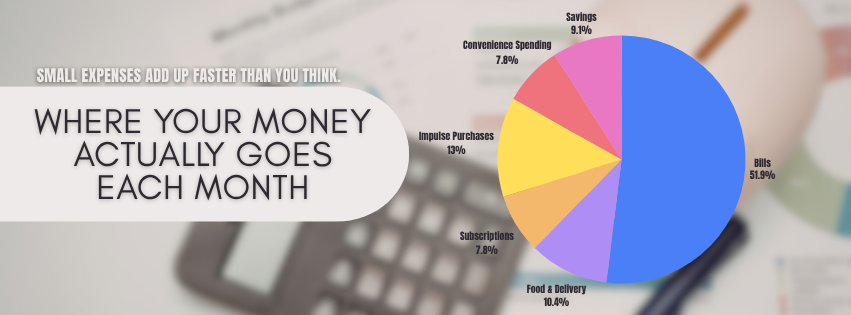
The biggest financial drains are rarely dramatic purchases. They’re the everyday expenses that slowly blend into the background. It’s the automatic renewals you stopped paying attention to months ago. The convenience spending that happens when life gets busy. The extra trips to the store that somehow never stay under budget. And because none of these expenses feel large on their own, they rarely trigger concern until they add up.
A few subscriptions here. A few impulse purchases there. A little overspending on food, delivery apps, or online shopping. Suddenly, hundreds of dollars are disappearing every month without you even realizing it. That’s why so many people feel like they should have more money left over than they actually do. The issue usually isn’t one huge mistake. It’s a collection of unnoticed patterns.
Why Budgeting Alone Doesn’t Work
For years, budgeting has been positioned as the solution to financial stress. But for many people, traditional budgeting feels exhausting. You create categories, set limits, promise yourself you’ll stick to them… and then life happens.
Unexpected expenses come up. Plans change. You overspend in one area and feel like you’ve failed completely. So the budget gets abandoned. The problem isn’t necessarily the budget itself. It’s that budgeting without awareness doesn’t create lasting change.
Because if you don’t understand how you’re spending, it’s difficult to change why you’re spending.
That’s why tracking matters more than restriction. When you learn how to track spending effectively, you start noticing patterns you couldn’t see before. You begin understanding what’s draining your finances, what’s actually important to you, and where small adjustments could make a significant impact. And unlike strict budgeting, tracking creates awareness without guilt.
A Simple System to Track Every Dollar and Spending Effectively
The idea of tracking every dollar sounds overwhelming at first, but it doesn’t have to be complicated. In fact, the simpler the system, the more likely you are to stick with it.
Start by paying attention. Not judging, just noticing.
For one month, track:
Fixed expenses
Variable spending
Subscriptions
Convenience purchases
Impulse buys
You can use an app, a spreadsheet, or even the notes section on your phone. The method matters less than the consistency. The goal isn’t perfection. The goal is visibility. Because once you can clearly see where your money is going, you can finally make intentional decisions about where you want it to go instead.
You may discover that you’re spending far more on convenience than you realized. Or that emotional spending tends to happen during stressful weeks. Or that subscriptions are quietly eating away at your monthly cash flow. These insights matter. Not because they make you feel guilty, but because they give you choices.
How to Regain Control Without Restriction
One of the biggest misconceptions about money management is that control requires deprivation. It doesn’t. Financial control isn’t about saying no to everything you enjoy. It’s about making sure your spending actually aligns with your priorities. When you understand your habits, you stop making decisions on autopilot.
You start asking:
Is this worth it to me?
Does this support my goals?
Am I spending intentionally or emotionally?
And over time, those small moments of awareness begin to change everything. Because the truth is, most people don’t need harsher rules. They need clearer systems. They need a way to manage money that feels sustainable, not punishing.
What Happens When You Finally Understand Your Spending
When you stop avoiding your numbers and start paying attention to them, money becomes less stressful. Not because your finances magically change overnight, but because uncertainty starts to disappear. You begin to feel more confident in making decisions. More prepared for unexpected expenses. More aware of where adjustments need to happen before things spiral. And perhaps most importantly, you stop feeling ashamed.
Because understanding your money creates clarity, and clarity creates control.
Taking Your Money Back Starts with Awareness
You don’t need to track every penny perfectly. You don’t need to stop enjoying your life. And you definitely don’t need to feel guilty every time you spend money. What you do need is awareness. Because when you understand where your money is actually going, you gain the power to decide where it should go instead.
That’s how financial control begins. Not through restriction.Not through fear.But through clarity, consistency, and small intentional choices that add up over time. And once you start seeing your money clearly, it becomes a whole lot easier to stop feeling controlled by it.
FAQs
What’s the best way to track spending effectively?
The best method is one you’ll consistently use. Apps, spreadsheets, or manual tracking can all work if they help you stay aware of your habits.
Why do I feel like my money disappears every month?
Small daily expenses, subscriptions, and convenience spending often add up quietly over time.
Is tracking spending better than budgeting?
Tracking creates awareness, which helps build sustainable financial habits. Budgeting works best when paired with spending awareness.
How long should I track my expenses?
Start with one month to identify patterns, then continue adjusting your system as needed.


Comments